


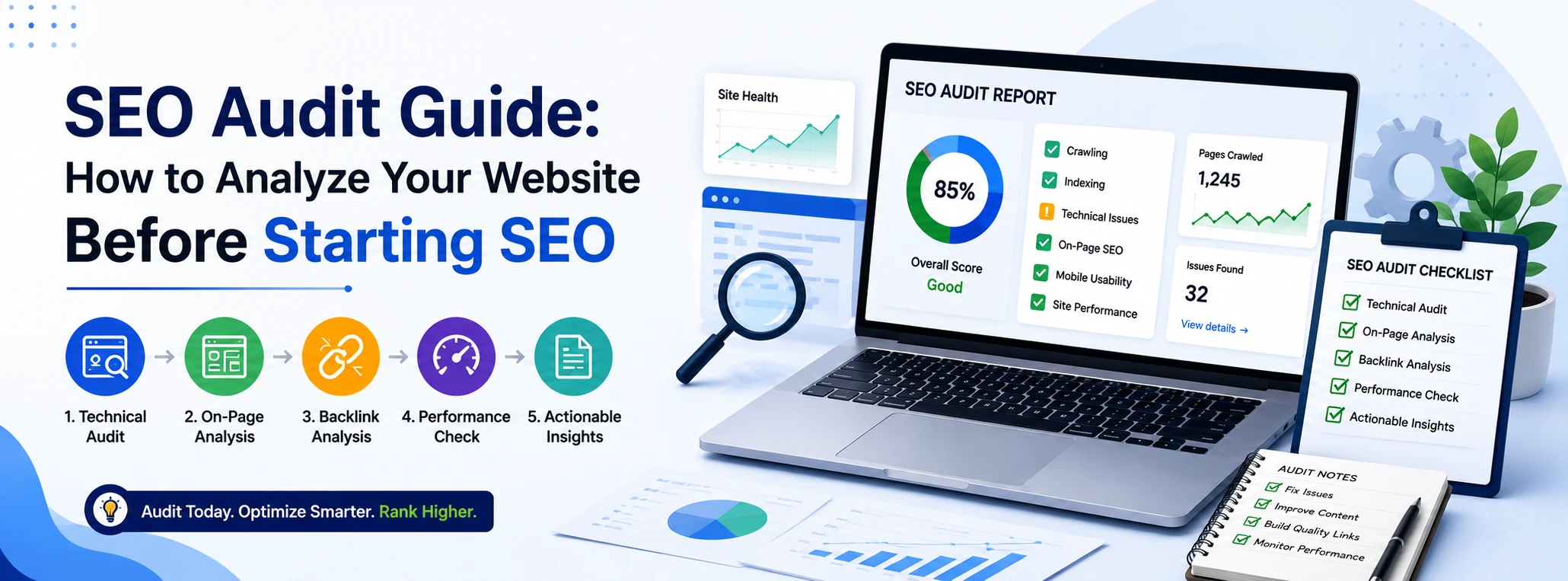
SEO Audit Guide: How to Analyze Your Website Before Starting SEO
Before investing in SEO services, it is important to understand where your website currently stands. An SEO audit helps identify technical issues, content gaps, ranking opportunities, and areas that need improvement.
A professional SEO audit provides a clear roadmap for improving search visibility, increasing organic traffic, and building a strong foundation for long-term SEO growth.
Whether you are planning to hire an SEO agency, improve your existing SEO strategy, or understand why your website is not ranking, an SEO audit is the first step toward better results.
What Is an SEO Audit?
An SEO audit is a detailed analysis of your website to evaluate its performance in search engines. It examines technical factors, on-page optimization, content quality, backlinks, user experience, and overall SEO health.
The purpose of an SEO audit is to discover:
- Technical problems affecting rankings
- Content improvement opportunities
- Keyword gaps
- Website performance issues
- Backlink quality problems
- Conversion improvement opportunities
Why an SEO Audit Is Important Before Starting SEO
Many businesses start SEO campaigns without understanding their website problems. This often results in wasted time and resources.
An SEO audit helps create a data-driven strategy by identifying what needs to be fixed first.
Benefits of an SEO Audit:
- Find hidden technical issues
- Improve website rankings
- Increase organic traffic opportunities
- Identify content gaps
- Understand competitor strategies
- Create a focused SEO strategy
Complete SEO Audit Process
1. Technical SEO Audit
Technical SEO ensures search engines can properly crawl, understand, and index your website.
Website Speed Analysis
Website speed directly impacts user experience and search performance. A technical audit checks page loading speed, performance issues, and optimization opportunities.
Mobile Friendliness
Since most searches happen on mobile devices, your website should provide a smooth mobile experience.
An SEO audit checks:
- Mobile usability
- Responsive design
- Page layout issues
- Mobile performance
Crawling and Indexing Issues
Search engines need to access and index your pages correctly.
An audit reviews:
- Robots.txt file
- XML sitemap
- Indexing problems
- Crawl errors
- Broken pages
Core Web Vitals
Core Web Vitals measure important website experience factors including loading speed, interaction, and visual stability.
On-Page SEO Audit
On-page SEO focuses on optimizing individual website pages to improve relevance and search visibility.
Title Tags and Meta Descriptions
A proper audit checks whether pages have optimized titles and descriptions that encourage users to click from search results.
Heading Structure
SEO audits review H1, H2, and H3 headings to ensure content structure is clear for both users and search engines.
Internal Linking
Internal linking helps search engines understand website structure and distribute authority between important pages.
Image Optimization
Images should be optimized with proper file sizes, alt text, and SEO-friendly formats.
Content SEO Audit
Content plays a major role in organic search success. A content audit evaluates whether your website provides valuable information that matches user search intent.
Content optimization helps improve relevance and search visibility.
Keyword Analysis
- Are pages targeting the right keywords?
- Are keywords matching search intent?
- Are important opportunities missing?
Content Quality Review
A content audit checks:
- Content usefulness
- Depth of information
- Originality
- Accuracy
- Expertise and trust signals
Backlink and Off-Page SEO Audit
Backlinks help search engines understand website authority. However, quality matters more than quantity.
A backlink audit evaluates:
- Number of backlinks
- Quality of referring websites
- Spam links
- Competitor backlink opportunities
- Link-building improvements
Local SEO Audit
For businesses targeting local customers, a local SEO audit is essential.
It reviews:
- Google Business Profile optimization
- Local keywords
- Business information consistency
- Online reviews
- Local citations
SEO Audit Checklist
- Website speed checked
- Mobile usability reviewed
- Technical errors identified
- Keyword opportunities analyzed
- Content quality reviewed
- Internal linking evaluated
- Backlinks analyzed
- Competitors researched
- Conversion opportunities identified
Free SEO Audit vs Professional SEO Audit
Free SEO Audit
Free SEO tools can identify basic issues such as missing metadata, speed problems, or technical errors.
However, they usually do not provide detailed strategy or business-specific recommendations.
Professional SEO Audit
A professional SEO audit provides deeper analysis including:
- Technical SEO evaluation
- Competitor research
- Keyword strategy
- Content opportunities
- Actionable SEO roadmap
When Should You Perform an SEO Audit?
- Before starting an SEO campaign
- After a website redesign
- When organic traffic drops
- Before hiring an SEO company
- When rankings stop improving
- During website migration
How SEO Audit Helps Your Organic SEO Strategy
An SEO audit creates the foundation for successful organic SEO. It helps businesses understand their current position and develop a strategy based on real data.
A strong SEO process usually follows:
- SEO Audit
- SEO Strategy Development
- Technical Improvements
- Content Optimization
- Authority Building
- Performance Tracking
Final Thoughts: Why SEO Audit Should Come First
An SEO audit is the starting point for improving your website’s search performance. Without understanding existing problems, businesses may invest in SEO activities that do not address the real issues.
A detailed SEO audit helps identify opportunities, fix weaknesses, and create a clear roadmap for sustainable organic growth.
Before choosing an SEO company or starting an SEO campaign, make sure your website has been properly analyzed.
Choosing the right SEO company and implementing a proper SEO strategy can help businesses achieve long-term search growth.