


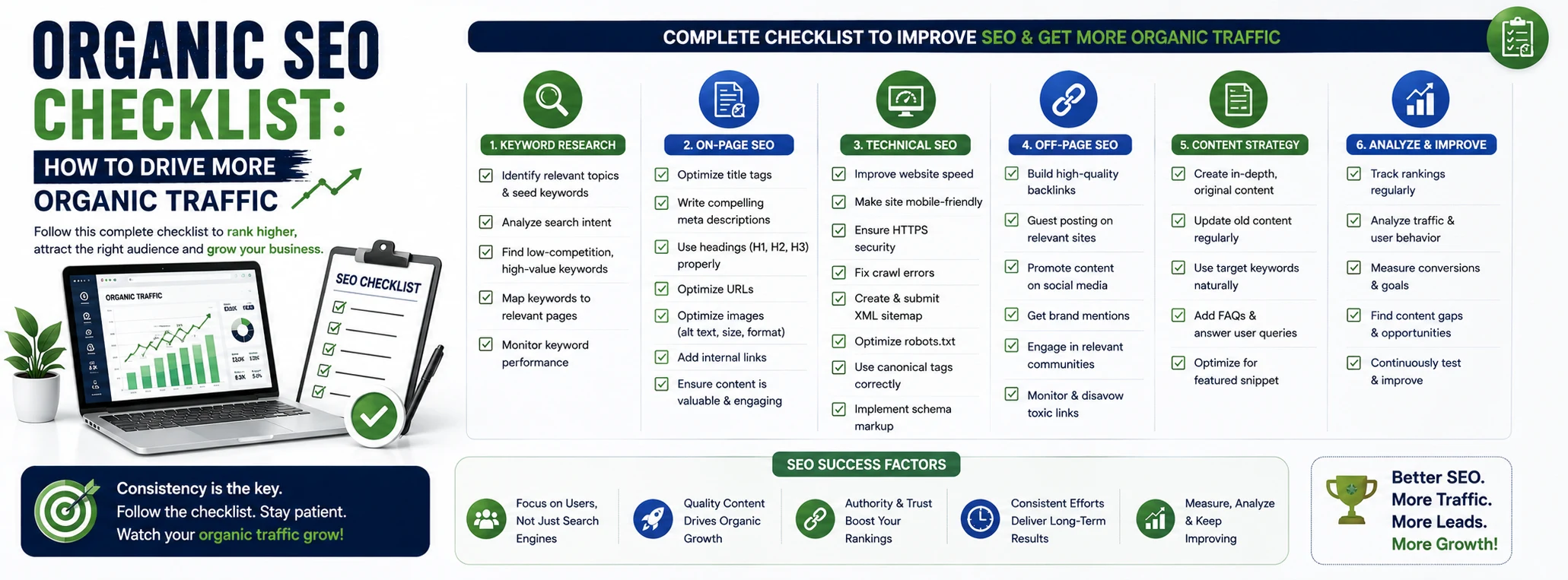
Organic SEO Checklist: How to Drive More Organic Traffic
Launching a website without a clear SEO plan is like opening a store in the middle of nowhere.
No matter how great your products or services are, potential customers won’t find you unless your website is optimized for search engines.
That’s where an organic SEO checklist becomes essential.
A well-structured checklist helps ensure every important SEO element—from technical performance to content quality—is optimized to improve rankings, increase organic traffic, and generate qualified leads.
Key Takeaways
- An organic SEO checklist helps improve rankings systematically.
- SEO audits identify technical issues, content gaps, and ranking opportunities.
- Keyword research helps target the right search terms.
- Technical SEO, content optimization, and internal linking improve visibility.
- Regular monitoring supports long-term organic growth.
What Is an Organic SEO Checklist?
An organic SEO checklist is a structured framework used to optimize a website for unpaid search engine rankings.
It includes SEO audits, keyword research, content optimization, technical SEO, internal linking, user experience improvements, and performance monitoring.
Why Every Business Needs an SEO Checklist
Many websites fail to achieve higher rankings because important SEO steps are ignored.
- Missing title tags
- Slow website speed
- Poor keyword targeting
- Weak internal linking
- Duplicate content
- Poor mobile experience
Complete Organic SEO Checklist
1. SEO Audit Checklist
Before implementing an organic SEO strategy, businesses should perform a complete SEO audit to identify website issues, technical errors, content gaps, and ranking opportunities.
An SEO audit reviews:
- Website technical health
- Page speed and Core Web Vitals
- Crawl and indexing issues
- Keyword performance
- Content gaps
- Internal linking structure
- Backlink profile
Identifying these issues early helps create an effective SEO roadmap and improves organic visibility.
After completing an SEO audit, businesses can understand which areas need improvement. The next step is keyword research to identify search terms that can attract relevant visitors.
2. Keyword Research Checklist
Keyword research helps identify the search terms your target audience uses to find products, services, and information.
- Identify primary keywords
- Find secondary keywords
- Target long-tail keywords
- Analyze competitor keywords
- Understand search intent
- Avoid keyword stuffing
3. Content Optimization Checklist
High-quality content is the foundation of successful organic SEO. Search engines prefer content that answers user questions and provides genuine value.
- Create original content
- Match search intent
- Cover topics in detail
- Add practical examples
- Include FAQs
- Update outdated content
4. On-Page SEO Checklist
On-page SEO helps search engines understand your content and improves user experience.
- Create optimized title tags
- Write engaging meta descriptions
- Use one clear H1 heading
- Structure content with H2 and H3 headings
- Add internal links
- Optimize images with alt text
- Create SEO-friendly URLs
- Use keywords naturally
5. Technical SEO Checklist
Technical SEO ensures search engines can crawl, understand, and index your website correctly.
- Improve website loading speed
- Ensure mobile responsiveness
- Enable HTTPS security
- Create XML sitemap
- Optimize robots.txt
- Fix broken links
- Implement canonical tags
- Add schema markup
- Optimize Core Web Vitals
6. User Experience (UX) Checklist
- Easy website navigation
- Mobile-friendly design
- Readable content layout
- Fast-loading pages
- Clear CTA buttons
- Simple page structure
7. Internal Linking Checklist
Internal links help search engines understand website structure and distribute page authority.
- Link relevant service pages like
organic SEO services
- Connect related blogs like
15 Proven Organic SEO Strategies
- Use descriptive anchor text
- Fix broken internal links
- Add links naturally
8. Image SEO Checklist
- Compress images
- Use descriptive filenames
- Add alt text
- Use WebP format
- Maintain correct image size
9. Local SEO Checklist
- Optimize Google Business Profile
- Maintain business information
- Collect customer reviews
- Create local citations
- Use location keywords
- Add local schema markup
10. Content Publishing Checklist
- Primary keyword included
- Meta title optimized
- Meta description added
- Heading structure completed
- Internal links added
- Images optimized
- CTA included
11. SEO Monitoring Checklist
Regular SEO monitoring helps identify performance changes, new opportunities, and areas requiring improvement.
- Monitor keyword rankings
- Track organic traffic growth
- Review Google Search Console data
- Check indexing status
- Analyze competitor performance
- Understand SEO growth expectations with How Long Does Organic SEO Take to Show Results?
- Update outdated content
- Perform regular SEO audits
Common SEO Mistakes to Avoid
- Ignoring technical SEO problems
- Publishing duplicate content
- Keyword stuffing
- Skipping internal links
- Avoid common ranking issues explained in Organic SEO Mistakes That Kill Rankings
- Not updating old content
How Often Should You Review Your SEO Checklist?
| Activity | Frequency |
|---|---|
| Keyword Review | Monthly |
| Technical SEO Audit | Every 3 Months |
| Content Updates | Every 3-6 Months |
| Backlink Review | Monthly |
| Competitor Analysis | Quarterly |
Frequently Asked Questions
What is an organic SEO checklist?
An organic SEO checklist is a structured list of SEO tasks that improves website visibility in unpaid search results.
Why is technical SEO important?
Technical SEO helps search engines crawl, index, and understand your website properly.
How often should SEO audits be performed?
Regular SEO audits should be performed to identify technical issues, content gaps, and ranking opportunities.
Final Thoughts
A well-planned organic SEO checklist helps businesses improve rankings, increase organic traffic, and build sustainable search visibility.
SEO requires continuous monitoring, optimization, and improvement to achieve long-term results.
For businesses looking for professional help, our organic SEO services provide customized strategies designed around business goals.
Ready to Improve Your Organic Rankings?
Our team provides organic SEO services, SEO audits, technical optimization, and customized SEO strategies designed around your business goals.