


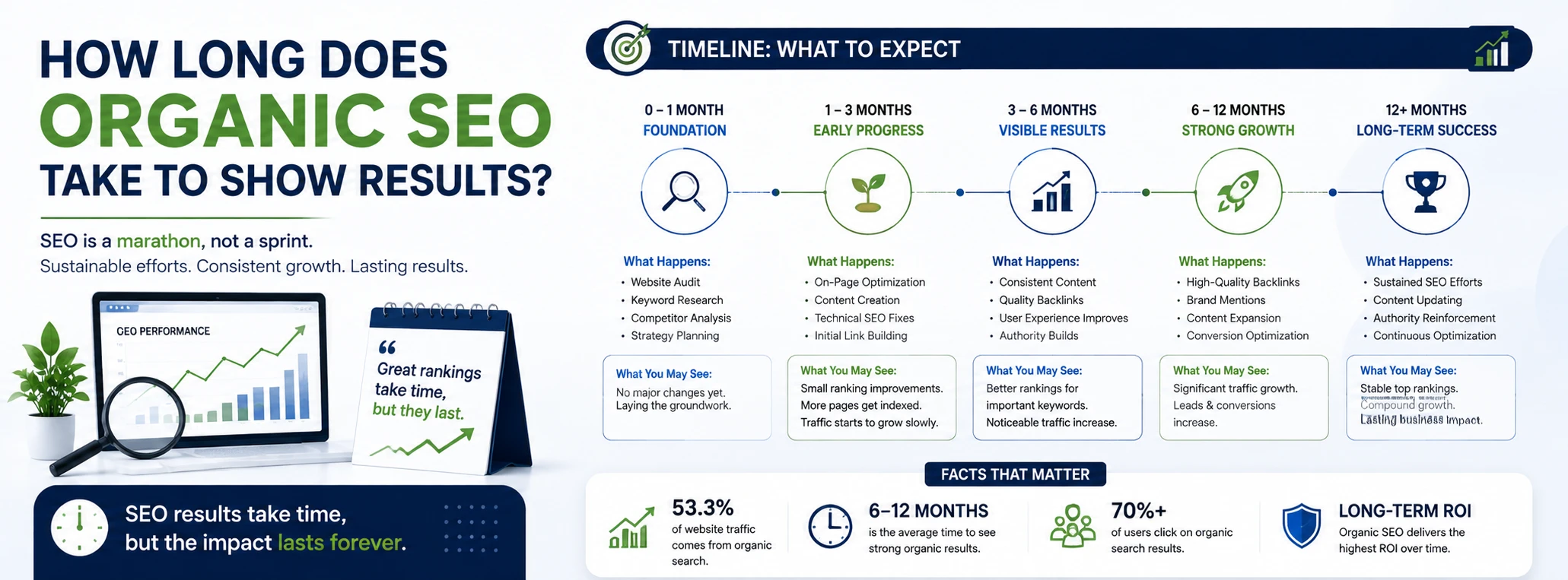
How Long Does Organic SEO Take to Show Results?
One of the most common questions businesses ask before investing in SEO is, “How long does organic SEO take?”
The simple answer is that SEO is a long-term investment, not an instant marketing solution. Unlike paid advertising, where traffic can start immediately after launching a campaign, organic SEO focuses on building sustainable visibility, authority, and trust with search engines.
The exact organic SEO timeline depends on several factors, including website age, industry competition, technical performance, content quality, backlink profile, and the consistency of optimization efforts.
Some businesses may notice early improvements within a few months, while competitive industries often require six months or longer to achieve significant rankings and traffic growth.
In this guide, you’ll learn how long SEO takes to work, what factors impact your results, and how a proper SEO strategy can accelerate sustainable growth.
Key Takeaways
- Organic SEO typically takes 3–6 months to show measurable improvements.
- Competitive industries may require 6–12 months for stronger rankings.
- Technical SEO, content quality, backlinks, and user experience influence results.
- SEO builds long-term assets that continue generating traffic over time.
- Consistent optimization leads to sustainable SEO growth.
What Is Organic SEO?
Organic SEO is the process of improving a website’s visibility in unpaid search engine results through strategic optimization.
Instead of paying for every visitor through advertising, businesses improve their website structure, content quality, and authority to attract users naturally from search engines.
Professional organic SEO services typically include:
- Keyword research
- Technical SEO optimization
- On-page SEO
- Content strategy
- Internal linking
- Link building
- Local SEO
- SEO performance tracking
The goal of organic SEO is not just higher rankings—it is attracting the right audience, increasing qualified traffic, and generating consistent business leads.
So, How Long Does Organic SEO Take?
Quick Answer
For most businesses, SEO results generally follow this timeline:
| Timeline | Expected Progress |
|---|---|
| Month 1 | Website audit, keyword research, competitor analysis, SEO strategy |
| Months 2–3 | Technical fixes, content optimization, indexing improvements |
| Months 3–6 | Keyword rankings improve and organic traffic begins increasing |
| Months 6–9 | More keywords reach stronger positions and leads grow |
| Months 9–12 | Improved authority, stable rankings, sustainable traffic |
Most businesses can expect noticeable improvements within three to six months when SEO is implemented correctly and consistently.
However, every website is different. A new website in a competitive market will usually take longer than an established website targeting less competitive keywords.
Why SEO Takes Time
Search engines do not rank websites instantly. Before improving rankings, they need time to:
- Crawl your website
- Index your pages
- Understand your content
- Compare your website with competitors
- Analyze user engagement
- Evaluate authority and trust
SEO success comes from building strong signals over time.
Unlike paid ads, where visibility disappears when spending stops, SEO creates long-term value
that continues growing.
7 Factors That Affect Your Organic SEO Timeline
1. Website Age and Domain Authority
Website history plays an important role in SEO performance.
Established websites with existing authority, quality backlinks, and strong content foundations
often achieve rankings faster than brand-new websites.
New websites usually require more time to build trust and demonstrate expertise.
2. Keyword Competition
Keyword difficulty directly impacts how quickly your website can rank.
| Keyword Type | Competition | Expected Timeline |
|---|---|---|
| Local keywords | Low | 2–4 months |
| Niche service keywords | Medium | 3–6 months |
| National commercial keywords | High | 6–12 months |
3. Technical SEO Health
Technical issues can significantly slow down SEO progress.
Common problems include:
- Slow website speed
- Broken links
- Crawl errors
- Poor mobile experience
- Duplicate content
- Missing schema markup
A strong technical foundation helps search engines crawl, understand, and rank your website more effectively.
4. Content Quality
Content remains one of the most important parts of SEO success.
Search engines prioritize content that is:
- Helpful
- Original
- Detailed
- Relevant
- Written for users
Publishing high-quality blogs, service pages, FAQs, and industry resources improves your chances of ranking for valuable keywords.
5. Backlinks and Website Authority
Quality backlinks continue to influence SEO performance.
Websites that earn links from trusted sources often build authority faster than websites without external signals.
Effective link-building methods include:
- Guest publishing
- Digital PR
- Industry partnerships
- Creating valuable resources
- Publishing original research
Focus on quality rather than quantity.
6. SEO Consistency
SEO is not a one-time activity.
Businesses that consistently:
- Publish useful content
- Improve existing pages
- Fix technical issues
- Monitor rankings
- Analyze competitors
usually achieve stronger long-term results.
Consistency creates SEO momentum.
7. User Experience (UX)
Search engines increasingly prioritize websites that provide a positive user experience. A website that is easy to navigate, fast, and mobile-friendly is more likely to perform better in search results.
Improve your website experience by focusing on:
- Mobile responsiveness
- Simple navigation
- Fast page loading speed
- Readable content formatting
- Website accessibility
- Clear calls to action
A better user experience helps visitors stay longer on your website and sends positive quality signals to search engines.
What Happens During the First Six Months of SEO?
Understanding the SEO growth timeline helps businesses set realistic expectations. A professional SEO strategy usually moves through different stages of research, optimization, and growth.
Month 1 – Planning and Research
The first month focuses on understanding your business, audience, competitors, and current website performance.
Typical activities include:
- Website SEO audit
- Competitor analysis
- Keyword research
- Technical SEO assessment
- Content gap analysis
- SEO roadmap creation
This stage creates the foundation for future SEO growth.
Months 2–3 – Optimization and Implementation
During this phase, the SEO strategy starts being implemented.
Common tasks include:
- Fixing technical SEO issues
- Optimizing existing service pages
- Publishing targeted content
- Improving internal linking
- Updating title tags and meta descriptions
- Adding structured data markup
Some websites may begin seeing early ranking improvements during this stage.
Months 3–6 – SEO Growth Phase
As search engines recognize website improvements, businesses often begin seeing measurable progress.
Common improvements include:
- Higher keyword rankings
- More indexed pages
- Increased organic traffic
- Improved click-through rates
- Initial lead generation growth
This is when SEO momentum starts building.
Months 6–12 – Sustainable Results
Businesses that continue investing in SEO often experience stronger results during this stage.
Expected improvements include:
- First-page rankings for important keywords
- Higher domain authority
- More qualified leads
- Improved conversion rates
- Lower customer acquisition costs
At this point, SEO becomes a valuable long-term business asset.
How to Speed Up Organic SEO Results
While no one can guarantee instant rankings, businesses can improve their chances of faster SEO growth by following proven strategies.
Best Practices to Accelerate SEO Growth
- Perform a complete SEO audit.
- Fix technical problems quickly.
- Create high-quality content consistently.
- Target relevant long-tail keywords.
- Build authoritative backlinks.
- Improve website speed.
- Strengthen internal linking.
- Refresh outdated content.
- Track SEO performance regularly.
Avoid shortcuts such as buying spam backlinks, keyword stuffing, or using outdated SEO techniques. These methods can damage rankings instead of improving them.
Common SEO Mistakes That Delay Results
Many businesses delay their SEO success by making avoidable mistakes.
Common problems include:
- Expecting immediate rankings
- Publishing low-quality content
- Ignoring technical SEO issues
- Targeting extremely competitive keywords too early
- Poor internal linking structure
- Inconsistent content publishing
- Buying low-quality backlinks
- Not monitoring SEO analytics
Successful SEO requires patience, consistency, and continuous improvement.
How to Measure SEO Progress
SEO success should not be measured only by rankings. Businesses should track metrics that show real growth and business impact.
| Metric | Why It Matters |
|---|---|
| Organic Traffic | Measures website visibility from search engines |
| Keyword Rankings | Shows progress for targeted search terms |
| Click-Through Rate (CTR) | Measures how attractive search listings are |
| Conversion Rate | Shows how effectively visitors become customers |
| Qualified Leads | Measures SEO impact on business growth |
| Revenue From Organic Search | Helps calculate SEO ROI |
Regular tracking helps businesses understand what is working and where improvements are needed.
Organic SEO Timeline Based on Business Type
| Business Type | Typical SEO Timeline |
|---|---|
| Local Small Business | 3–6 months |
| Niche Service Website | 4–8 months |
| New Website | 6–12 months |
| Competitive Industry | 9–18 months |
| Ecommerce Website | 6–12+ months |
The timeline depends on competition, website quality, content strategy, and the effectiveness of SEO implementation.
Why Hiring an SEO Consultant Can Help
An experienced SEO consultant can help businesses avoid common mistakes and create a customized strategy based on their goals.
A professional consultant can assist with:
- SEO audits
- Keyword strategy
- Technical optimization
- Content planning
- Competitor analysis
- Performance tracking
Working with experts can improve efficiency and help businesses achieve sustainable SEO growth faster.
Frequently Asked Questions
How long does organic SEO take?
Most businesses begin seeing measurable SEO improvements within 3–6 months. However, highly competitive industries may require 6–12 months or longer to achieve strong rankings and consistent organic traffic growth.
Why does SEO take so long to show results?
SEO takes time because search engines need to crawl, index, evaluate, and trust your website. Ranking improvements depend on multiple factors, including content quality, technical performance, website authority, competition, and user experience.
Can SEO results happen faster?
SEO results can be improved by following a strong SEO strategy, fixing technical issues, publishing high-quality content, and building authoritative backlinks. However, there are no guaranteed shortcuts for achieving sustainable rankings quickly.
Is organic SEO better than paid advertising?
Organic SEO and paid advertising serve different purposes. Paid ads provide immediate visibility, while SEO builds long-term search presence and sustainable traffic. Many businesses achieve the best results by combining both strategies.
Should I hire an SEO consultant?
Hiring an experienced SEO consultant can help businesses identify growth opportunities, fix technical problems, create effective content strategies, and improve search performance.
Are organic SEO services worth the investment?
Yes. While SEO requires time and consistent effort, it can provide long-term benefits such as increased organic traffic, better brand visibility, qualified leads, and improved return on investment.
How often should SEO performance be reviewed?
SEO performance should be monitored regularly. Monthly tracking of rankings, traffic, conversions, and technical issues helps businesses identify opportunities and maintain growth.
Final Thoughts
If you’re wondering “how long does organic SEO take?”, the answer depends on your website condition, competition level, industry, and the quality of your SEO implementation.
Unlike paid advertising, SEO is not designed for instant results. It is a long-term growth strategy that builds visibility, authority, and trust over time.
Businesses that consistently invest in a strong SEO strategy, publish valuable content, improve technical performance, and optimize user experience are more likely to achieve sustainable SEO growth.
The most successful companies understand that SEO is an ongoing process. By focusing on continuous improvement instead of quick fixes, businesses can create a powerful digital asset that generates traffic and leads for years.
Ready to Improve Your Organic Search Growth?
If you want to increase rankings, attract qualified visitors, and build a sustainable online presence, our team can help.
We provide professional organic SEO services, technical SEO audits, content optimization, keyword research, and customized SEO strategies designed around your business goals.
Book your free SEO consultation today and get a customized SEO roadmap to improve search visibility, increase organic traffic, and generate long-term business growth.